If you’ve ever wondered what it’s like to experience the wild heart of America, you won’t want to miss our latest podcast episode, Yellowstone Wild Encounters! Fresh from an unforgettable family trip to Grand Teton and Yellowstone National Parks, Khai and Khang are excited to share our up-close wildlife adventures with you.
Bison: Prairie Survivors
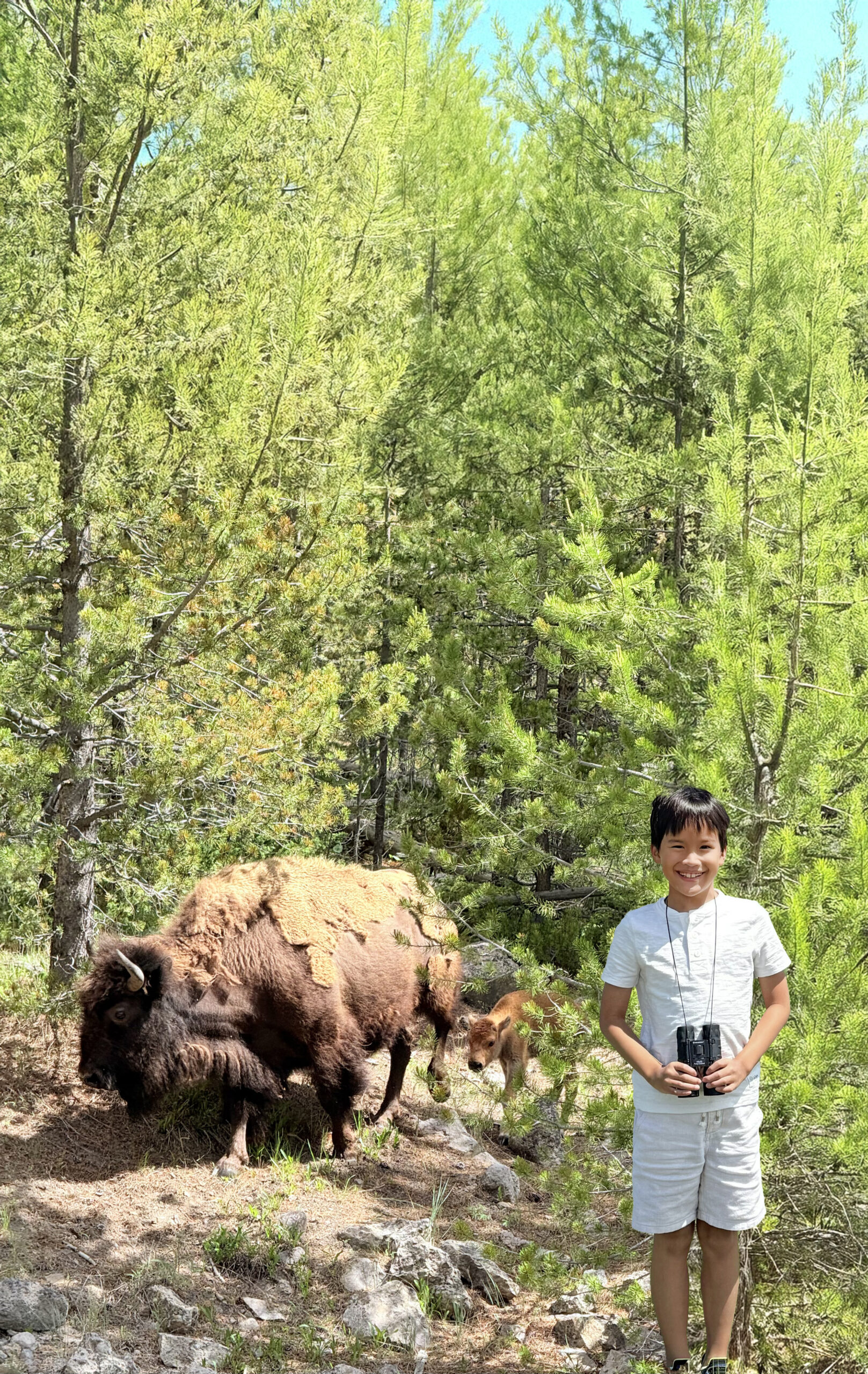
We kicked things off with the mighty bison, the true icons of the American West. Did you know their thick, woolly coats are so insulating that snow can pile up on their backs without melting? Bison are built for survival, using their powerful heads to plow through deep snow and huddling together for warmth. They’re also ecosystem engineers, helping to shape the prairie landscape with their grazing and wallowing habits.
Pronghorns: Speedsters of the Plains
Next up: pronghorns—the fastest land animals in North America! We were amazed to learn that their unique horns aren’t quite like antlers or true horns, and that they can spot movement from nearly a kilometer away thanks to their enormous eyes. Built for speed and stamina, pronghorns are perfectly adapted to life on the open grasslands.
Coyotes: The Song Dogs
Coyotes kept us entertained (and sometimes up at night!) with their chorus of howls, yips, and barks. These clever “song dogs” are true omnivores and even team up with badgers for hunting. We loved learning about their family bonds and the surprising ways they help each other out in the wild.
Moose: Gentle Giants
Spotting a moose near Jenny Lake was a highlight! Moose are the only deer species that can dive underwater to feed on aquatic plants. With their insulating hollow hair, snowshoe-like hooves, and huge antlers, they’re built for the extremes of Yellowstone’s seasons. Fun fact: their long noses even warm the air before it reaches their lungs!
White-Tailed Deer: Adaptable and Ancient
We wrapped up with white-tailed deer, the oldest living deer species in the Americas. These graceful animals have a sense of smell up to 10,000 times better than ours and are strong swimmers—perfect for navigating Yellowstone’s varied habitats. Their adaptability means you might spot them anywhere from deep forests to the edge of your campground.
Whether you’re a seasoned explorer or just curious about America’s wild wonders, this episode is packed with fascinating facts, real-life stories, and family-friendly fun. Listen now to Yellowstone Wild Encounters and let your next adventure begin!
Don’t forget to subscribe and share with your fellow wildlife enthusiasts. Keep exploring!